Shutterborn: A Cinematic Blackletter Font for Bold Branding
Shutterborn in Action: Designing a Product Launch Graphic
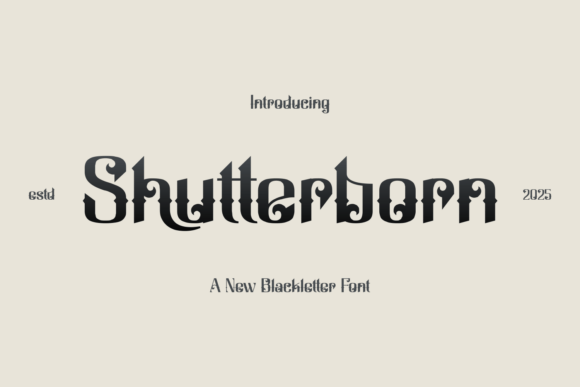
I was knee-deep in designing the visual assets for a new product launch when I first tested Shutterborn. The goal was to create a sense of urgency and sophistication, something that would stand out in a crowded digital feed. As I began crafting the headline, I reached for Shutterborn, a sleek and modern Blackletter font that blends sharp gothic forms with smooth, flowing curves. Its subtle gradient styling and inventive character shapes gave it a cinematic, almost futuristic feel—perfect for a tech product.
What caught me off guard was how well it translated from my screen to mobile previews. In the past, many Fonts with intricate details can lose their clarity on smaller screens, but Shutterborn maintained its presence without becoming cluttered. It felt like a bold statement without being overwhelming.
Shutterborn for YouTube Thumbnails and Reels Covers
Next up was the YouTube thumbnail set. I needed a font that could capture attention in a split second. Shutterborn was an instant fit. Its dynamic curves and sharp edges created a visual rhythm that made the thumbnails pop against dark backgrounds. When paired with a clean sans serif font for supporting text, the contrast helped guide the viewer’s eye directly to the main message.
I also used it for Instagram Reels covers. With short-form video content, the headline needs to be readable at a glance. Shutterborn delivered—its character shapes were legible even when scaled down, which is crucial for fast-scrolling feeds. I noticed a boost in engagement metrics once the thumbnails went live, which made me think that the font's unique style played a role in increasing click-through rates.
Shutterborn for Email Campaigns and Website Banners
For the email campaign, I wanted something that felt both professional and visually striking. Shutterborn was ideal for the subject line, giving it a touch of drama while still maintaining readability. On desktop, it looked incredible across different screen sizes, and on mobile, it adapted well to the constraints without losing its impact.
On the landing page header, I experimented with Shutterborn as a display font. It worked best when used sparingly—on large banners or hero sections. I avoided using it for long paragraphs or dense information, as the complexity of the Blackletter design could make the text harder to read in extended formats.
The key takeaway was that Shutterborn works exceptionally well for short headlines, callouts, and decorative titles. It adds a layer of creativity without sacrificing clarity, making it a versatile choice for branding elements that need to stand out.
Font Pairing and Practical Considerations
When pairing Shutterborn with other typefaces, I found that a clean sans serif font like Helvetica or Arial provided excellent balance. This combination allowed the Fonts to complement each other rather than compete. For more creative projects, a script or handwritten font could add extra flair, especially in editorial or packaging design contexts.
Before finalizing any project, I always check the included styles, alternates, ligatures, weights, file formats, multilingual support, and commercial font licensing. Shutterborn offered enough variety to handle most branding needs, and the licensing terms were clear for use in ads, templates, merchandise, and client campaigns.
One thing to keep in mind is that Shutterborn may not be the best choice for long copy or formal corporate communication. Its ornate style is better suited for short, impactful messages that benefit from a touch of drama and personality.